
1 / 13
Gallery images are previews only. Your purchase includes every item listed in What you get, even when not every included item is pictured.
Printable Download$15.99 $7.99 Sale
Quinceañera Ceremony, Speech & Traditions Pack
A 13-page Quinceañera pack for ceremony requirements and speaking roles, names and introductions, personal and family speeches, padrino recognition, chosen-tradition wording, readings, host transitions, rehearsal and final script approval. Includes US Letter and A4 PDFs in one ZIP.
✓ Secure checkout✓ Tutorial included✓ Instant download after purchase
What you get
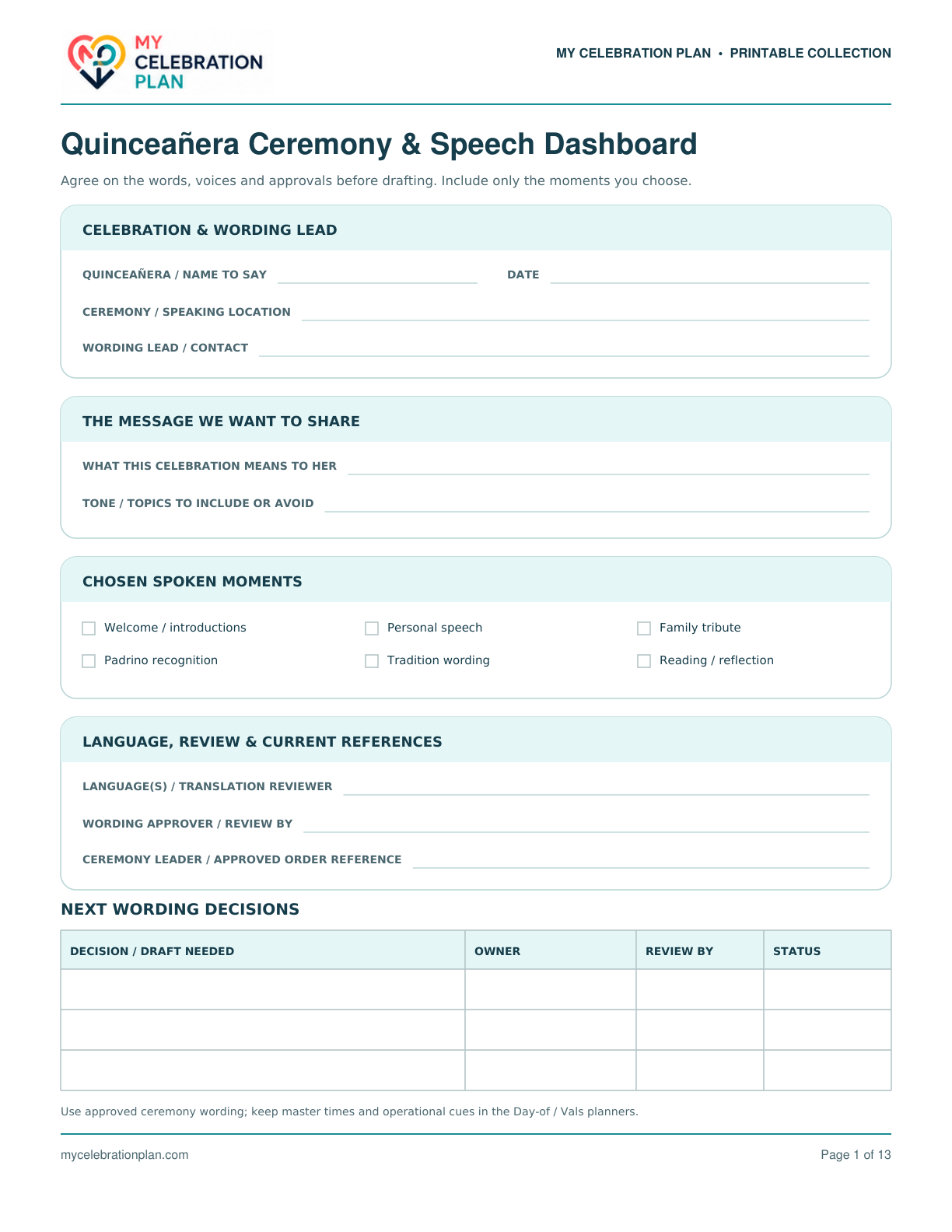
- Quinceañera Ceremony & Speech Dashboard
- Ceremony Requirements & Approved Content
- Ceremony Order & Speaking Roles
- Names, Pronunciation & Introductions
- Quinceañera Speech Builder
- Parent / Loved-One Tribute Builder
- Padrino & Supporter Recognition
- Chosen Tradition: Meaning & Spoken Script
- Reading, Reflection & Dedication Brief
- Welcome, Transitions & Closing Words
- Final Speaker Copy
- Read-Aloud Rehearsal & Revision Check
- Final Script Approval & Distribution
Quick Tutorial
How it works
Choose the spoken moments that fit your family, draft meaningful words, confirm required ceremony content, rehearse aloud and share one approved set of scripts.
- Download the ZIP and choose the US Letter or A4 PDF that matches your paper. Print at Actual Size / 100%. Begin with Quinceañera Ceremony & Speech Dashboard: record the celebration details, wording lead, message and tone, languages, reviewer and approver. Select only the spoken moments your family wants, and assign the next wording decisions to an owner and review date. A court, ceremony or particular custom is optional.
- If a ceremony is planned, complete Ceremony Requirements & Approved Content with the ceremony leader before drafting. Record the format, location, review contact, required preparation and content deadlines. List the permitted readings, prayers, music or symbolic actions, with their approved sources and restrictions. Give unresolved questions an owner and review date. For a church ceremony, follow parish-approved texts and instructions; skip this worksheet if no ceremony is planned.
- Use Ceremony Order & Speaking Roles to number the approved ceremony moments in sequence. Name the speaker or reader for each part, identify the correct approved text or file, and note the introduction or words leading to the next part. Have the ceremony leader review the order. Keep event times and operational cues in the Day-of Binder rather than creating a second master schedule here.
- Complete Names, Pronunciation & Introductions with each person’s preferred spoken name, a pronunciation hint the speaker can read, relationship or role, and approved introduction words. Number the introduction order and confirm titles and details that should stay private. Include court members only when a court is participating. Share the verified names with the host and relevant speakers before rehearsal.
- Invite the quinceañera to complete Quinceañera Speech Builder in her own voice. Set the speaking moment, language and target length, then collect an opening, the birthday’s personal meaning, specific thank-yous, one memory she is comfortable sharing, and a closing wish or promise. Arrange these ideas into the finished words on Page 11; use Page 12 to rehearse and refine them.
- Give Parent / Loved-One Tribute Builder to each chosen speaker. Record the speaker, relationship, language, speaking moment and target length. Develop one personal story, an admired quality with a concrete example, encouragement for her next chapter and a closing wish. Confirm sensitive details with the quinceañera before finalizing. Print another copy for another speaker, then prepare and rehearse the final copy on Pages 11 and 12.
- Use Padrino & Supporter Recognition to plan the people or groups your family chooses to thank. Record recognition order, role or support, specific words of thanks and what each person permits you to mention or wants omitted. Use the verified names from Page 4. Keep contribution amounts and private details out of the spoken recognition, then transfer approved wording to the speaker or host’s final copy.
- Print one Chosen Tradition: Meaning & Spoken Script worksheet for each selected tradition. Name the tradition, speaker, participants, language and wording approver or approved reference. Describe its personal meaning, draft opening words and an invitation, write the words spoken during the action and mark pauses, then prepare closing words and the next spoken handoff. Follow any ceremony leader requirements. Keep item preparation and setup responsibilities in the Court & Traditions Planner.
- Complete Reading, Reflection & Dedication Brief for each chosen reading or dedication. Identify the title, author, source, reader, language, approved version and expected length. Confirm required permission, credit, restrictions and ceremony approval. Write why the words were chosen, the introduction and dedication, pronunciation or pause notes, and closing words. Keep the approved text with the reader’s final copy; print another worksheet for another reading.
- Prepare Welcome, Transitions & Closing Words with the host. Record the language, reviewer and approved ceremony or reception sequence reference. Draft a welcome that fits the family’s chosen tone. For each transition, identify the moment ending, the person or part introduced next and the exact connecting words. Finish with approved thanks and the next invitation or closing message. Keep performance and technical cues in the Vals & Reception Planner and master times in the Day-of Binder.
- Use Final Speaker Copy for the finished script. Record the speaker, moment, language, version, update date, approver and read-aloud length. Write the complete words in order, place pronunciation hints beside names and mark [PAUSE] where needed. Make the final sentence and next spoken handoff easy to find in the separate closing box. Print additional copies for more speakers or a longer script, and number Script Sheet ___ of ___.
- Rehearse aloud using Read-Aloud Rehearsal & Revision Check. Identify the exact script version, rehearsal date and listener, then compare target length with actual read-aloud length. Check names, language changes, pauses, ending, length and personal details only after confirming them in this version. Record exact edits, reasons, owners and recheck dates. Update the final copy, read changed passages aloud again and record the revised version before sending it for approval.
- Finish Final Script Approval & Distribution after the wording is ready. Record the wording lead, packet version, issued date and master copy location. List every approved script or reading, its final reference and approver/date. Give each speaker their own current words; share relevant copies with the host, ceremony leader and coordinator, recording when they were sent and received. Name who approves later changes, resends revised copies, replaces old versions and notifies affected people. Reprint reusable worksheets when you need more space.